1912–1986
Fall 2026
Idaho Architecture, 1950 to 1970
Reconnecting Boise with the architects who drew its modern buildings, one drawing, one building, one name at a time.
The story
A bank on State Street
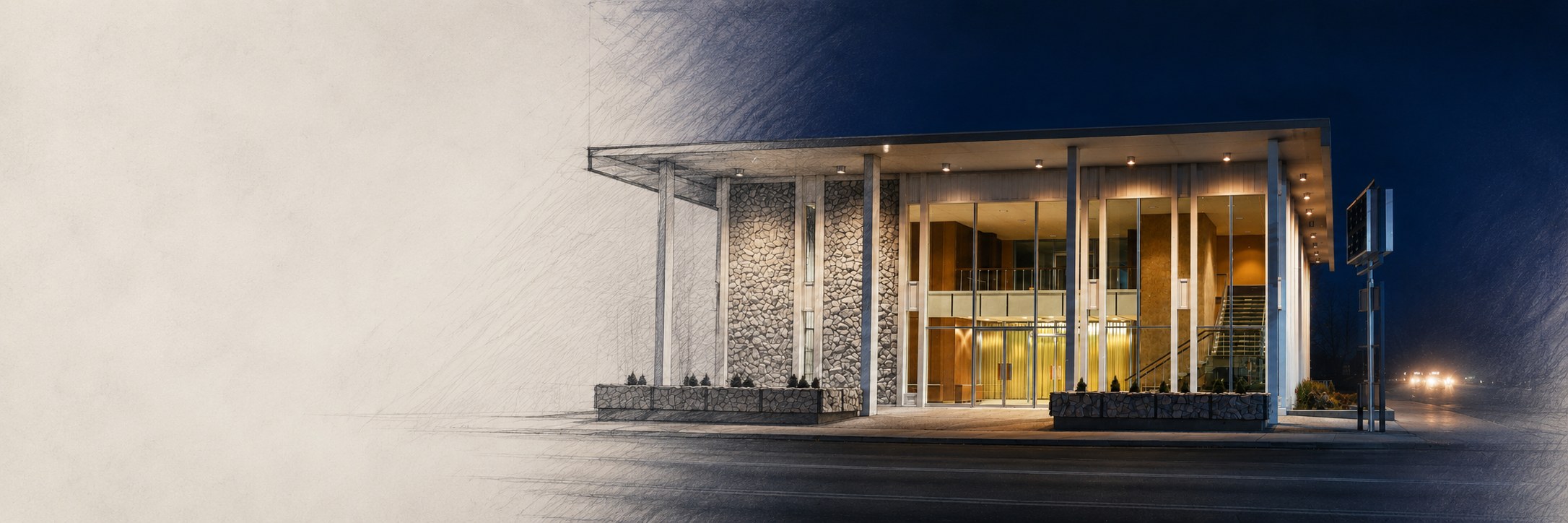
Home Federal opened at 800 W. State Street in 1965. The stone and concrete promised that your savings were in steady hands. Behind the glass, banking unfolded in an orderly procession at street level. You could see people moving through the bank, and they could be seen from the sidewalk. Even the ordinary business of making a deposit had acquired a little ceremony. You were banking in a modern building, and for a moment some of its modernity belonged to you.
Explore Home Federal’s architecture, archives, and preservation story
ArchitectsThompson and Kolbo
ClientHome Federal Savings and Loan
Completed1965
StyleNew Formalist
MaterialsStone, concrete, glass
Address800 W. State Street
Treasure Valley architects Harold Thompson and Neal Kolbo gave it careful proportions and solid materials. Sixty years later, the building is approved for demolition. Our team documented it in March 2026, before it goes.
Few people walking past know who designed it. This project wants to change this, for Thompson and Kolbo and for the architects who worked beside them.
The lens
Why we're doing this
Ultimately centers on reconnection: specifically, recognizing the work, design, and practices of Boise-area architects from 1950 to 1970.Shaun Weston
Every line in these buildings was once drawn by hand. Behind each architect stood drafters, builders, and clients. Later, builders and budgets took more control.
Modern buildings in Idaho grew from the same forces shaping the whole country: highways, irrigation, home loans, schools, and tourism. Local architects turned those forces into places people still use.
The architects
Boise's modern makers
These architects designed the schools, banks, churches, and homes many of us grew up in.
1920–2008
Glen E. Cline
Designed some of Idaho's biggest public buildings, including Borah High School, the Boise Air Terminal, and the Len B. Jordan State Office Building.1921–2007
Nat J. Adams
Led a firm with more than 700 projects: schools, banks, churches, hospitals, and houses. His work ranged from Glen Haven homes to a bank on State Street.1921–2001
Art Troutner
Co-founded Trus Joist and used engineered wood to try bold new structures. His ideas grew from experimental houses to the roof of the Kibbie Dome.1922–1977
1925–2014
1925–2014
Harold Thompson and Neal Kolbo
Their Treasure Valley firm designed banks, schools, churches, and civic buildings with a look of order and trust, including Home Federal at 800 W. State Street.1924–2009
Joe LaMarche
Worked on ski slopes and in courtrooms, designing the Pioneer Lodge at Bogus Basin and the Idaho Supreme Court Building.1925–2011
Edgar B. Jensen
Practiced for about sixty years after graduating from the University of Idaho in 1951. His work includes the main Boise Post Office, Immanuel Lutheran Church, and the Highlands Community Fallout Shelter, opened in 1961 as a national prototype.1925–2016
Charles F. Hummel
Carried his family's 1890s firm into the modern era with schools, churches, libraries, and federal buildings. Later in life he became a leading voice for historic preservation.1926–2019
Ed Trout
Led Albertsons' architecture department for 17 years. He brought modern design to everyday places, including the grocery stores where families bought bread and milk.1932–2019
Brad Shaw
A Yale-trained designer whose work included homes, clinics, savings and loans, and the KTVB and KBOI television stations.1925–?
Pat Saviers Sun Valley
One of Idaho's first licensed women architects, in 1953. She designed houses, her own award-winning office, and the Hemingway Memorial at Trail Creek. Most of her known Idaho work is gone.Outside influences
Big names, local buildings
A few national figures left a mark on Boise too. Frank Lloyd Wright shaped how Idahoans pictured a modern house, as seen at Teater's Knoll. Pietro Belluschi designed the Idaho Statesman Building. Kenneth W. Brooks of Spokane designed the Intermountain Gas campus. In 1967, Skidmore, Owings and Merrill built the Boise Cascade Headquarters, its only known Idaho project.
What they built
Buildings by type
Students, tellers, congregations, and families met modern design every day. Here are a few places to start.
SchoolsBorah High School, Hillcrest School, Valley View Elementary
GovernmentIdaho Supreme Court Building, Len B. Jordan State Office Building
ChurchesUniversity Christian Church, All Saints Episcopal, St. Thomas Episcopal
Banks and storesHome Federal at 800 W. State Street, First Security Bank, Albertsons
MediaKTVB, KBOI, Idaho Public Television
HousesGlen Haven houses, Takahara House, Simplot residence
Getting aroundBoise Air Terminal, Boise Greenbelt
What comes next
Preservation as hospitality
I remember places whose addresses I could no longer give you. The entrance, the light inside, where someone used to sit. I did not think to photograph them. They were simply there.
Now I find myself looking for those details in other buildings. Someone chose that window. Someone spent thirty years looking through it. Their name may be missing from every record I find. Preservation as hospitality means making room for that person, for what they remember. I am doing this because I want to know what happened in these places while there is still someone to ask.
Know one of these buildings? Have drawings, photos, or stories to share?
jeff@preservation.ltd
Explore
Stories from the field
Home Federal Savings
A luminous New Formalist bank at the edge of Boise’s Capitol Mall, its design, archival record, and uncertain future.
Explore the building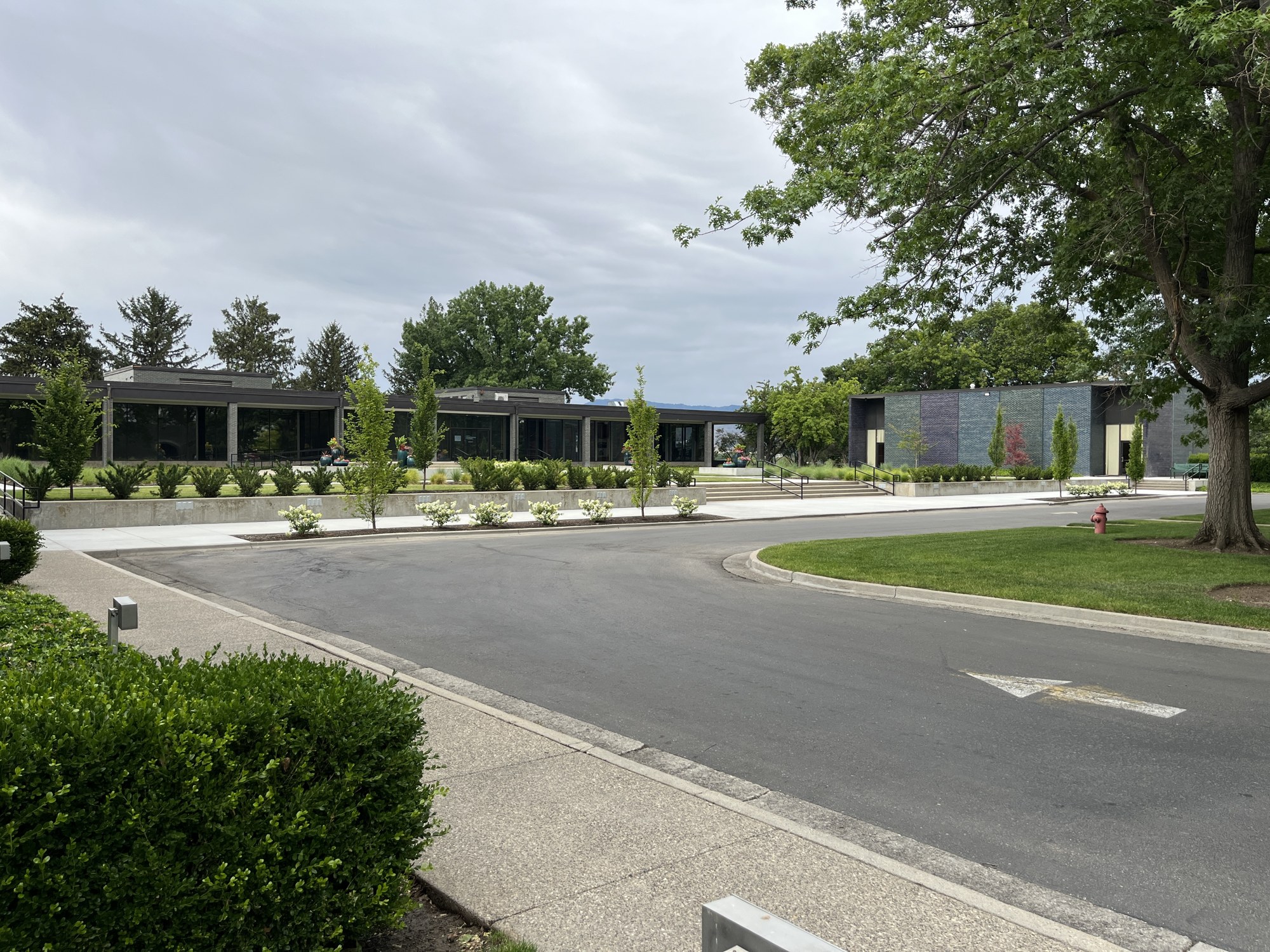
Intermountain Gas
A corporate campus on the Boise Bench brings architecture, landscape, water, and flame together, with a human story at its heart.
Explore the campus